Academic Simulacra: Forecasting Research Ideas through Multi-Agent LLM Simulations
Jiwoong Choi*, Yingrong Mao*, Donghyun Kang, James Evans
(*equal contribution)
Abstract
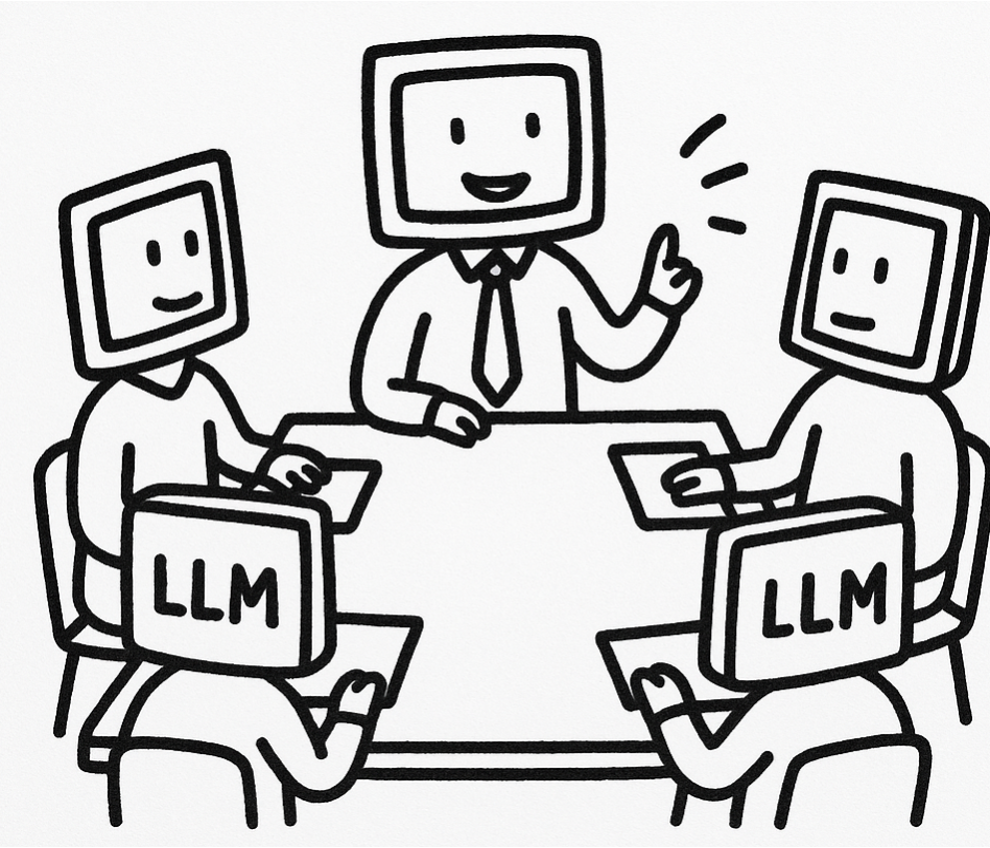
Large language models (LLMs) trained on massive corpora of human knowledge show strong abilities in reasoning, question answering, and knowledge synthesis. Linked to large-scale scholarly records, they can approximate scientific trajectories and plausible alternatives. We present a framework that simulates scholarly conversations among multi-agent LLMs instantiated as digital twins of real researchers, each grounded in publication histories. Modeling 8,269 authors of 2024 papers across nine flagship computer-science conferences, agents propose and refine hypothetical 2024 research ideas beyond the models’ knowledge cutoff. Generated ideas are compared with actual papers using semantic-similarity and convex-hull analyses at the author and conference levels. At the author level, cross-classification shows strong correspondence between generated and focal classifications (94.4% inside–inside; 85.3% outside–outside), indicating that simulations approximate researchers’ research directions. At the conference level, simulations produced at least one idea outside both 2023 and 2024 convex hulls for 99.1% of focal papers, but these ideas were more recombinatorial and less feasible than human-authored ones. Overall, the results suggest that LLM-based simulations mirror established patterns of scientific production but tend to extend into less immediately feasible directions, recombining existing ideas.